
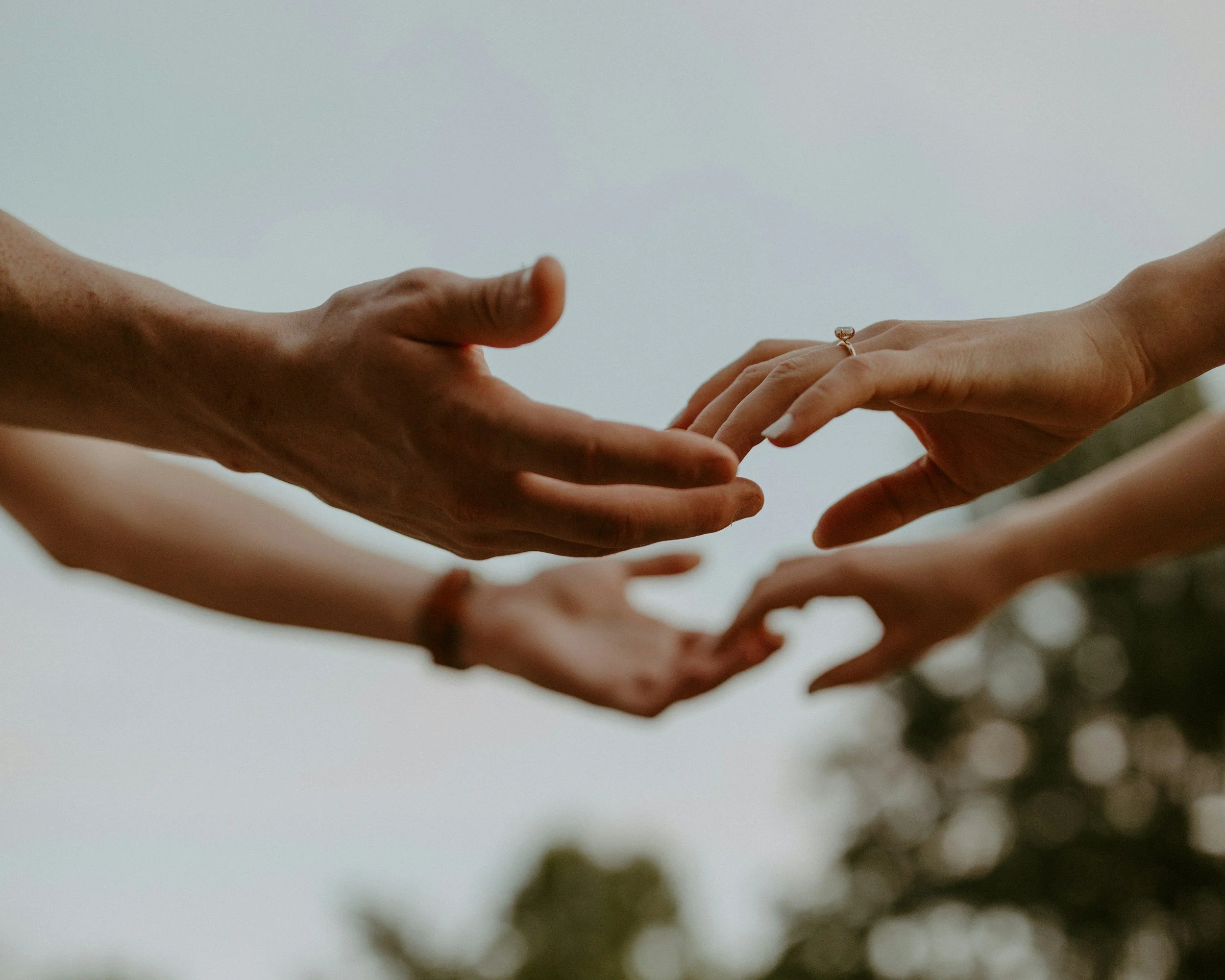
What if “Codependency” Is Just Humans Trying to Human Without a Village?
What if "Codependency" Is Just Humans Trying to Human Without a Village?
I used to think the term codependency was helpful. Part of me still does, and that's okay. When I first learned about codependency, that I was jumping in to do things others could do themselves, that I was making myself responsible for other people's feelings, something clicked. It gave me language for why I was so exhausted. It explained why I felt like if I didn't help, no one would. It helped me see patterns I needed to see. Especially in relationships where caring for someone was actually harming me. But lately I've been questioning it. Because here's what keeps happening. Someone I love is hurting. My stomach cramps. My chest gets hot. Every part of me wants to help. And then a voice in my head says: That's codependent. You're doing it again. But is it?
What if it's just being human?
What if the impulse to care, to help, to feel someone else's pain isn't pathology? What if it's just human? Think about emergency rooms. Someone walks in with a broken arm. No one stops to ask if they deserve help, or whether they brought it on themselves, or if they're being dramatic. They need help, so we help. The need itself is enough. Why is emotional pain different? When someone shows up at my practice because their mom called on their behalf, or their sister pushed them to reach out, we don't call that codependency. We call that love. We call that someone seeing you were drowning and throwing you a line.
The real problem
The problem isn't that we care too much. The problem is we're trying to be entire villages by ourselves. One person cannot meet all of another person's needs. We're not designed that way. Even babies thrive better with multiple caregivers, not one exhausted parent doing everything alone. Humans are wired for community. Networks of people showing up for each other. Not isolated pairs where one person becomes solely responsible for another's survival. But we don't have that anymore. We have people in separate houses, working forty-hour weeks, too tired to connect. We have a cultural story that says if you need help, something's wrong with you. If you can't handle it alone, you're weak. So when someone we love is struggling, we look around and think: No one else is helping them. I guess it's all on me. That's not codependency. That's trying to be human in a society that forgot how humans actually work.
The questions we ask
Here's what makes me want to flip a table: we interrogate whether people really need help. Whether they've tried hard enough on their own first. Whether they're being too much. But when a client tells me no one reached out on the anniversary of their loved one's death, or that they're too scared to tell their friends they're struggling because they don't want to be a burden, that's not them being dramatic. That's them correctly reading a culture that has made needing each other shameful. You know that saying, you can lead a horse to water, but you can't make it drink? What if the horse was poisoned by water before? What if their nervous system screams danger every time they get close? What if they need help, just not the kind we're offering? We wouldn't walk away and say, well, that's on them. We'd try something different. We'd bring in other horses who feel safe. We'd be patient. Why don't we do that for humans?
The survival strategies we shame
I think about clients who apologize for crying. For being "too much." For not having it together yet. I think about how we're all carrying survival strategies we developed when we had no choice, and we call them disorders and feel shame for having them. Your people-pleasing might have saved you when criticism felt life-threatening. Your hypervigilance might have kept you safe when your environment was actually dangerous. Your desperate need to help the people you love might come from a time when no one helped you. Those aren't character flaws. Those are creative solutions to impossible situations. And yes, eventually, those parts deserve rest. We deserve new ways of being in relationship. But we can't do that alone, in isolation, trying to fix ourselves so we're finally worthy of connection. We heal through safe, consistent connection with people who don't require perfection first.
Maybe it's interdependence
Maybe the goal was never independence. Maybe it's interdependence. Where leaning on each other doesn't make you weak, and being leaned on doesn't make you a martyr. Where it's just mutual. Human. Maybe what we've been calling codependency is just what happens when humans try to human without a village. And maybe we can start building those villages again. Not because someone's profiting. Not through obligation. Just because we actually need each other. Because that's what it means to be alive.
If any of this resonates, you're not alone. The space between therapy sessions is often where we need each other most, and at Wholehearted Counseling we're slowly building community spaces where showing up messy is welcome and you don't have to earn your belonging. If you'd like to hear about what we're working on, you can reach us at hello@wholeheartedcounseling.co or follow along on Instagram.
Karen Haag, LPC
Founder, Wholehearted Counseling
This post is shared for education, validation, and connection. It's not a substitute for therapy.